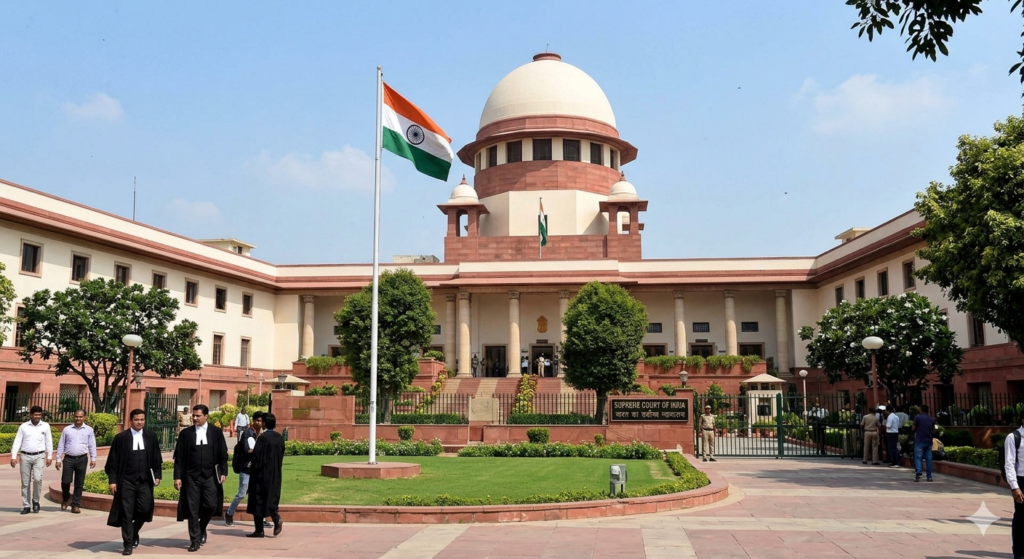
CHAPTER IV: CONSUMER DISPUTES REDRESSAL COMMISSION
This chapter establishes the three-tier system of Consumer Courts (Commissions): District, State, and National.
Section 28. Establishment of District Consumer Disputes Redressal Commission.
This section establishes the lowest tier of the consumer court system, located in every district.
28(1) Establishment in Every District:
- Simple Translation: The State Government must officially establish a District Consumer Disputes Redressal Commission (to be called the District Commission) in every district of the State through a formal notification.
- Proviso: The State Government has the power to establish more than one District Commission in a single district if it deems necessary (e.g., in a very large or densely populated metropolitan district).
- Real-World Example: The State of Maharashtra establishes one District Commission in Pune, one in Nashik, and—due to its massive population and caseload—establishes three separate District Commissions within Mumbai.
28(2) Composition of the District Commission:
- Simple Translation: Each District Commission must consist of:
- (a) A President (who leads the Commission).
- (b) Not less than two members and not more than a maximum number of members decided by rules, after consultation with the Central Government.
- Real-World Example: The rules might prescribe a District Commission must have one President and a minimum of two members, but could have up to four members, depending on the workload approved by the Central Government.
Section 29. Qualifications, etc., of President and members of District Commission.
This section ensures that the leadership of the District Commissions is competent and qualified.
29. Rules for Appointment of Members:
- Simple Translation: The Central Government (not the State Government) is responsible for making rules that decide the following for the President and members of the District Commission:
- The necessary qualifications (what education and experience they need).
- The method of recruitment (how they are hired).
- The procedure for appointment (how they are officially selected).
- The term of office (how long they serve).
- The conditions for resignation and removal.
- Real-World Example: The Central Government might make a rule stating that the President must be a retired or sitting District Judge, and members must have a degree and 10 years of experience in law, economics, or public administration.
Section 30. Salaries, allowances and other terms and conditions of service of President and members of District Commission.
This section specifies who sets the pay and working conditions for the leaders of the District Commissions.
30. Rules for Pay and Service Conditions:
- Simple Translation: The State Government (not the Central Government) is responsible for making the rules that set the salaries, allowances, and other terms and conditions of service for the President and members of the District Commission.
- Real-World Example: While the Central Government sets the qualifications (Section 29), the State Government of Karnataka will decide the specific monthly salary, housing allowance, and travel benefits for the President and members of the Bengaluru District Commission, ensuring the pay scale aligns with state-level administrative pay.
Section 31. Transitional provision.
This section deals with the smooth transfer of staff and leadership from the old Consumer Protection Act of 1986 to the new Act of 2019.
31. Holding Office Until Term Completion:
- Simple Translation: Any person who was appointed as a President or member of a District Commission under the old law (before this 2019 Act started) will continue to hold their office in the new District Commission until the end of the original term for which they were appointed.
- Real-World Example: A member was appointed to the Delhi District Forum in 2018 for a five-year term. Even after the 2019 Act came into force, that member continues their service in the new Delhi District Commission until their term ends in 2023, ensuring continuity of judicial work.
Section 32. Vacancy in office of member of District Commission.
This section outlines how the State Government handles temporary gaps in the District Commission’s leadership.
32. State Government Directions for Vacancies:
- Simple Translation: If the office of the President or a member of a District Commission is temporarily vacant (empty), the State Government can issue a formal notification that directs one of two things:
- (a) Delegating Jurisdiction: Another specified District Commission can be given the authority to handle the cases for the district with the vacancy as well.
- (b) Delegating Powers: The President or a member of another specified District Commission can be authorized to take over the duties and functions of the vacant President or member.
- Real-World Example: The President of the Kochi District Commission suddenly retires, leaving a vacancy. The State Government notifies that the President of the neighboring Alappuzha District Commission will temporarily also exercise the powers of the Kochi Commission President until a new appointment is made.
Section 33. Officers and other employees of District Commission.
This section covers the non-judicial staff that assists the Commission in its day-to-day operations.
33(1) Staffing the Commission:
- Simple Translation: The State Government must provide the District Commission with the necessary officers and other employees (administrative staff) required to help the Commission efficiently carry out its functions under the Act.
- Real-World Example: The State Government hires and provides the Commission with a Registrar, clerks, stenographers, and office assistants to manage case filings, records, and correspondence.
33(2) Staff Reporting Structure:
- Simple Translation: The officers and other employees of the District Commission must perform their duties under the overall control and supervision of the President of that Commission.
- Real-World Example: The Registrar of the District Commission reports directly to the President and handles daily administrative tasks, like setting the daily cause list and managing the office, as directed by the President.
33(3) Setting Pay and Conditions:
- Simple Translation: The rules for the salaries, allowances, and other service conditions (like leave and retirement benefits) for the officers and other employees must be set by the rules made under this Act (by the State Government).
- Real-World Example: The State sets the official pay scale for the clerical staff and the terms for their pension and health insurance benefits.
Section 34. Jurisdiction of District Commission.
This is a key section defining the scope and geographical limits of the District Commission’s power to hear complaints.
34(1) Pecuniary (Monetary) Jurisdiction:
- Simple Translation: The District Commission can only accept complaints where the total value of the goods or services paid as consideration (the price paid) does not exceed one crore rupees (₹10,000,000).
- Proviso: The Central Government may, if it deems necessary, notify a different monetary value for this limit in the future.
- Real-World Example: If a consumer buys a car for ₹15 lakh (₹1,500,000) and it is defective, they must file the complaint in the District Commission. If they buy an apartment for ₹1.2 crore (₹12,000,000), they must file in the State Commission (as the value exceeds the ₹1 crore limit).
34(2) Territorial Jurisdiction (Where to File):
- Simple Translation: A complaint must be filed in the District Commission that has jurisdiction over the area where one of the following four conditions is met:
- (a) Opposite Party’s Location (Default): The company or individual you are complaining against (opposite party) lives, carries on business, has a branch office, or personally works for gain at the time the complaint is filed. (If there are multiple defendants, this applies if each of them fits this description.)
- (b) Opposite Party’s Location (With Permission): Where there are multiple companies/individuals you are complaining against, and only some of them live, carry on business, etc., in that district. You can still file there, provided you get permission from the District Commission first.
- (c) Cause of Action: Where the problem started (the whole or part of the incident that led to the complaint, or the “cause of action”) occurred.
- (d) Complainant’s Location (New Rule): The consumer making the complaint (complainant) resides or personally works for gain (lives or has their place of employment).
- Real-World Example: A consumer in Hyderabad (Complainant’s location) buys a product online from a seller based in Bengaluru (Opposite Party’s location), and the product arrived damaged (Cause of Action). The consumer can now file the complaint in Hyderabad (d), Bengaluru (a), or where the delivery was finalized and damage occurred (c).
34(3) Place of Functioning:
- Simple Translation: The District Commission will normally operate from the district headquarters. However, the State Government, after consulting with the State Commission, may officially notify other locations within the district where the Commission can occasionally perform its functions.
- Real-World Example: The main office of the District Commission is in the city center. To make justice more accessible, the State Government allows the Commission to hold sittings (camps) once a month in a remote town within the district.
Section 35. Manner in which complaint shall be made.
This section clearly defines who is allowed to file a complaint and how that complaint must be submitted.
35(1) Who Can File a Complaint:
- Simple Translation: A complaint about faulty goods, deficient services, or unfair trade practice can be filed with the District Commission by the following entities:
- (a) The Consumer:
- (i) The person who bought or was provided the goods or service.
- (ii) The person who alleges the unfair trade practice.
- (b) Recognized Consumer Association: Any registered consumer association, regardless of whether the specific consumer involved is a member of that association or not.
- (c) Group of Consumers (Class Action): One or more consumers acting on behalf of many consumers who have the same interest (a group complaint), but only with the express permission of the District Commission.
- (d) Government Authorities: The Central Government, the Central Authority (CCPA), or the State Government.
- (a) The Consumer:
- Proviso (Electronic Filing): The complaint may be filed electronically in a manner that will be prescribed by rules.
- Explanation (Definition): A “recognised consumer association” simply means any voluntary consumer association that is legally registered under the laws currently in force.
- Real-World Example: A housing society (representing multiple flat owners) can file a complaint against a builder (c), or the Central Authority can file a case against a deceptive pharmaceutical company (d), or a consumer advocacy group can file a complaint against a restaurant chain (b).
35(2) Fee for Filing:
- Simple Translation: Every complaint that is filed must be accompanied by a fee. The amount of the fee and the method of payment (including electronic payment) will be set by prescribed rules.
- Real-World Example: The rules might state that for cases up to ₹5 lakh, the filing fee is ₹100, and this fee can be paid online via a prescribed digital portal.
Section 36. Proceedings before District Commission.
This section defines the basic rules and timelines for handling a complaint once it has been filed.
36(1) Conduct of Proceedings:
- Simple Translation: Every case hearing before the District Commission must be conducted by the President of the Commission and at least one member sitting together (a quorum of at least two people).
- Proviso (Continuity if a Member is Absent): If one member is unable to continue a proceeding until it’s finished (e.g., due to illness or resignation), the President and the other continuing member must resume the proceeding from the exact stage where it was last heard by the previous member.
- Real-World Example: A case is heard by the President and Member A for three months. Member A then takes medical leave. The President and Member B (the continuing member) review the case file and pick up the hearing where the last argument was made, ensuring the consumer doesn’t have to restart the case.
36(2) Admission or Rejection of Complaint:
- Simple Translation: Once the Commission receives a complaint, it can either issue an order to admit the complaint (allow the case to proceed) or reject it.
- First Proviso (Hearing the Complainant): The Commission cannot reject a complaint unless it has first given the person who filed the complaint (complainant) an opportunity of being heard (a chance to explain why the complaint should be admitted).
- Second Proviso (Timeline for Admissibility): The decision on whether to admit the complaint must generally be made within twenty-one days from the date the complaint was filed.
- Real-World Example: A consumer files a complaint that is over the ₹1 crore limit. The Commission can reject it, but first must give the consumer a hearing to explain if any part of the claim falls within the limit. If the consumer proves the claim is under ₹1 crore, the Commission admits the case within three weeks.
36(3) Deemed Admission:
- Simple Translation: If the District Commission does not decide on the complaint’s admissibility within the 21-day period specified, the complaint is automatically considered admitted (i.e., the case can proceed).
- Real-World Example: If a consumer files a complaint and the Commission fails to issue a formal admission or rejection order after 22 days, the consumer and the opposite party can assume the case has been admitted, preventing bureaucratic delay.
Section 37. Reference to mediation.
This section encourages and formalizes the option of settling consumer disputes out of court through mediation.
37(1) Suggesting Mediation:
- Simple Translation: At the first hearing after the case is admitted, or at any point later in the proceedings, if the District Commission believes the dispute has the potential for a settlement that both parties might agree to, it can suggest mediation. Certain complex cases, defined by rules, may be excluded. If suggested, the Commission directs both parties to provide their written consent to mediation within five days.
- Real-World Example: A dispute involves a delayed furniture delivery. At the first hearing, the President realizes the issue is not complex but involves a communication breakdown. The Commission suggests mediation to resolve the dispute faster than a full trial.
37(2) Referring the Matter:
- Simple Translation: If both parties agree to mediation and provide their written consent, the District Commission must formally refer the matter for mediation within five days of receiving the consent. Once referred, the rules outlined in Chapter V (Mediation) will govern the process.
- Real-World Example: The consumer and the furniture company both submit their consent forms. The Commission then sends the case file to the attached Consumer Mediation Cell to begin the settlement process.
Section 38. Procedure on admission of complaint.
This is a comprehensive section that outlines the detailed steps the Commission must follow after a complaint is admitted, especially when defective goods require laboratory testing.
38(1) Starting the Procedure:
- Simple Translation: After a complaint is admitted (or if a case referred to mediation fails to settle), the District Commission must officially proceed with hearing the complaint.
- Real-World Example: The mediation report comes back stating “no settlement reached.” The Commission immediately schedules the case for a formal hearing and proceeds with the next steps.
38(2) Procedure for Complaints involving Goods (Requiring Testing):
- Simple Translation: If the complaint is about goods, the Commission must follow these steps:
- (a) Sending Complaint to Opposite Party: Within twenty-one days of admission, a copy of the complaint must be sent to the opposite party, directing them to submit their side of the case within thirty days (with a possible extension of up to fifteen days).
- (b) Default Action: If the opposite party denies the allegations, disputes the complaint, or fails to respond within the time limit, the Commission proceeds to settle the dispute using the steps below (c to g).
- (c) Laboratory Testing (If Needed): If the defect cannot be determined without testing, the Commission takes a sample of the goods from the complainant, officially seals and authenticates it, and refers the sealed sample to an appropriate laboratory. The lab is directed to analyze the goods and report its findings to the Commission within forty-five days (or a granted extension).
- (d) Requiring Fees from Complainant: Before sending the sample to the lab, the Commission requires the complainant to deposit the necessary fees to cover the cost of the analysis or test.
- (e) Remitting Fees and Forwarding Report: The Commission pays the deposited amount to the lab. Once the lab report is received, the Commission forwards a copy of the report (with any appropriate remarks) to the opposite party.
- (f) Dispute over Lab Report: If either party disputes the accuracy of the lab’s findings or the testing methods used, they must submit their objections in writing.
- (g) Final Hearing and Order: The Commission gives both the complainant and the opposite party a reasonable opportunity to be heard regarding the lab report and any objections raised. Based on this, the Commission issues the appropriate final order under Section 39.
- Real-World Example: A consumer complains about a defective batch of fertilizer. The Commission sends the sample to a recognized agricultural lab (c). The lab finds it’s 50% water. The fertilizer company disputes the lab’s method (f). The Commission holds a final hearing where both sides present evidence about the testing method before making a final judgment (g).
38(3) Procedure for Services or Untestable Goods:
- Simple Translation: If the complaint is about services (like banking or insurance) or about goods that cannot be tested following the above procedure, the Commission follows a different, simpler path:
- (a) Sending Complaint to Opposite Party: A copy of the complaint is sent to the opposite party, directing them to submit their side of the case within the standard thirty days (plus a possible fifteen-day extension).
- (b) Default Action for Services/Untestable Goods: If the opposite party disputes the allegations or fails to respond, the Commission proceeds to settle the dispute in one of two ways:
- (i) Based on Evidence: If the opposite party responds and denies the allegations, the Commission decides the case based on the evidence brought forward by both parties.
- (ii) Ex Parte Decision (One-Sided): If the opposite party fails to respond or appear, the Commission proceeds ex parte (one-sided) and decides the case based only on the evidence presented by the complainant.
- (c) Complainant Failure to Appear: If the complainant fails to appear on the date of hearing, the Commission will decide the complaint on its merits (i.e., based on the evidence available, which usually means dismissing it if no evidence is presented).
- Real-World Example: A consumer sues a hospital for deficiency in service (a service complaint). If the hospital doesn’t respond, the Commission will issue an ex parte decision based solely on the consumer’s medical records and complaint (b)(ii).
38(4) Obtaining Information from Electronic Service Providers:
- Simple Translation: The District Commission has the power to formally order an electronic service provider (like an e-commerce platform) to provide information, documents, or records as needed for the case.
- Real-World Example: A dispute arises over a product sold on an online marketplace. The Commission orders the marketplace (the electronic service provider) to produce the seller’s sales records and the communication history between the seller and the buyer.
38(5) Compliance with Natural Justice:
- Simple Translation: If the Commission follows the legal procedure outlined in sub-sections (2) and (3), the proceedings cannot be challenged in any court on the argument that the principles of natural justice (fairness and impartiality) were not followed.
- Real-World Example: Once the Commission has properly served notice, allowed the parties to present evidence, and conducted the hearing as prescribed, a losing party cannot appeal simply by claiming the process was unfair.
38(6) Evidence Submission:
- Simple Translation: Every complaint must generally be heard and decided based on affidavits (sworn written statements) and documentary evidence placed on record.
- Proviso (Personal Hearing/Video Conferencing): However, if a request is made for parties to be heard in person or through video conferencing, the Commission may allow it if a sufficient reason is provided, and the Commission records its reasons for allowing it in writing.
- Real-World Example: Most cases are decided on paper, but if a key technical expert needs to be cross-examined or an elderly complainant cannot prepare an affidavit easily, the Commission can permit a live video hearing.
38(7) Timeline for Disposal:
- Simple Translation: The Commission must try to dispose of every complaint as quickly as possible.
- No Testing Required: The goal is to decide the complaint within three months from the date the opposite party received the notice.
- Testing Required: If the case requires analysis or testing of goods, the goal is to decide it within five months.
- First Proviso (No Adjournment): Adjournments (postponements) should not ordinarily be granted unless a sufficient reason is shown, and the reasons for the adjournment are recorded in writing.
- Second Proviso (Costs for Adjournment): The Commission can order the party requesting the postponement to pay costs (a penalty fee) caused by the adjournment, as specified by regulations.
- Third Proviso (Recording Reasons for Delay): If a complaint is disposed of after the specified three- or five-month period, the Commission must record in writing the reasons for the delay at the time the final order is issued.
- Real-World Example: A non-testing case should be finished in three months. If the manufacturer requests a two-week delay, the Commission may grant it but charge the manufacturer ₹2,000 in costs to discourage frivolous delays.
38(8) Power to Pass Interim Orders:
- Simple Translation: While the case is ongoing, the Commission may pass any interim order (a temporary order) that is considered just and proper given the circumstances.
- Real-World Example: A consumer is suing a builder for dangerous construction defects. The Commission may pass an interim order instructing the builder to immediately erect safety barriers and halt construction until the case is decided.
38(9) Powers of a Civil Court:
- Simple Translation: For the purpose of carrying out the procedures in this section, the District Commission is granted the same powers as a Civil Court under the Code of Civil Procedure, 1908, but limited to the following matters:
- (a) Summoning and Examining: Calling any defendant or witness and examining them under oath.
- (b) Discovery and Production: Requiring the revelation and production of any document or evidence.
- (c) Receiving Evidence: Accepting evidence in the form of affidavits.
- (d) Requisitioning Reports: Demanding the analysis or test report from the laboratory or other relevant source.
- (e) Issuing Commissions: Appointing external authorities to examine a witness or document (e.g., a technical expert).
- (f) Other Prescribed Matters: Any other matter set by the Central Government rules.
- Real-World Example: If a witness refuses to appear for a deposition, the Commission can issue a formal summons (a), just like a regular Civil Court, compelling their attendance.
38(10) Judicial and Criminal Court Status:
- Simple Translation: Every proceeding before the District Commission is considered a judicial proceeding (under sections 193 and 228 of the Indian Penal Code) and the Commission itself is deemed a criminal court for the purpose of initiating contempt proceedings (under the Code of Criminal Procedure).
- Real-World Example: This means that lying under oath during a consumer commission hearing can be prosecuted as perjury, and ignoring a court summons can lead to contempt charges.
38(11) Class Action Rules:
- Simple Translation: If the complaint is a group complaint (class action) filed on behalf of numerous consumers (referred to in Section 2(5)(v)), the rules for representative suits (Order I Rule 8 of the Civil Procedure Code) will apply. The only change is that any mention of a ‘suit’ or ‘decree’ in those rules will be treated as a reference to a ‘complaint’ or the Commission’s ‘order’.
- Real-World Example: If 50 buyers of a defective housing project file a class action, the Commission must follow the established procedure for notifying all 50 people about the case’s progress.
38(12) Death of a Party:
- Simple Translation: If the complainant or the opposite party dies during the pendency of the case, the rules of succession (Order XXII of the Civil Procedure Code) apply. Any mention of ‘plaintiff’ or ‘defendant’ will be treated as a reference to the ‘complainant’ or the ‘opposite party’.
- Real-World Example: If a consumer dies while awaiting compensation, their legal heir can step in and continue the case on their behalf.
Section 39. Findings of District Commission.
This powerful section dictates the exact types of final relief and compensatory orders the District Commission can impose after it finds the consumer’s complaint is proven.
39(1) Orders the Commission Can Issue:
- Simple Translation: If the District Commission is satisfied that the goods are defective, the services are deficient, the trade practice is unfair, or a claim for product liability is proven, it must issue an order directing the opposite party to do one or more of the following:
- (a) Remove Defects (Goods): Get rid of the specific defect pointed out by the laboratory report from the goods in question.
- (b) Replace Goods: Exchange the defective goods with new goods of a similar type that are free from any defect.
- (c) Refund and Interest: Return the price or charges paid by the complainant, along with any interest on that amount that the Commission decides is fair.
- (d) Compensate for Negligence: Pay an amount determined by the Commission as compensation for any loss or injury the consumer suffered due to the opposite party’s negligence.
- Proviso (Punitive Damages): The Commission also has the power to grant punitive damages (damages meant to punish the wrongdoer, not just compensate the victim) in circumstances it deems fit.
- (e) Compensate for Product Liability: Pay the amount determined as compensation in a product liability action (under Chapter VI).
- (f) Remove Defects/Deficiencies (General): Fix the defects in the goods or remove the deficiencies in the services.
- (g) Stop Unfair Practices: Discontinue the unfair or restrictive trade practice and promise not to repeat them.
- (h) Stop Sale of Hazardous Goods: Stop offering the hazardous or unsafe goods for sale.
- (i) Withdraw Hazardous Goods: Formally withdraw hazardous goods from being offered for sale (i.e., issue a recall).
- (j) Cease Manufacture: Stop manufacturing hazardous goods and stop offering services that are hazardous in nature.
- (k) Collective Compensation (Non-Identifiable Consumers): Pay a sum of money determined by the Commission if it believes a large number of consumers have suffered loss or injury but are not easily identifiable.
- Proviso (Minimum Amount): This collective sum must be at least twenty-five per cent. (25%) of the value of the defective goods or services provided to those unidentifiable consumers.
- (l) Corrective Advertisement: Pay for a corrective advertisement to nullify (neutralize) the effect of the misleading advertisement issued previously.
- (m) Provide Costs: Pay for the adequate costs incurred by the parties (legal or otherwise).
- (n) Cease and Desist (Advertising): Formally stop (cease) and refrain from issuing (desist) any misleading advertisement.
- Real-World Example: A builder failed to complete a swimming pool (deficient service, f). The Commission orders the builder to refund the full cost of the pool plus interest (c), and orders the builder to pay the family an additional ₹2 lakh for the mental distress caused by the delay (d). If the builder’s contract was deemed unfair, they would also be ordered to discontinue that contract practice (g).
39(2) Crediting and Utilizing Funds:
- Simple Translation: Any amount of money received under the collective compensation clause (1)(k) must be credited to a specific fund and utilized in a manner defined by rules.
- Real-World Example: The collective fine imposed under 39(1)(k) for a massive, unidentifiable class of affected consumers might be directed to the State’s Consumer Welfare Fund, which is then used to promote consumer education programs.
39(3) Disagreement Between Members (Majority Opinion):
- Simple Translation: If a case is heard by the President and a member, and they disagree on any point, they must write down the point of disagreement and refer it to another member for a separate hearing on that point. The final decision will be based on the opinion of the majority of the members who have heard the case.
- Proviso (Timeline for Third Member): The third member must provide their opinion on the referred point within one month.
- Real-World Example: The President thinks the consumer should receive ₹10 lakh compensation, while the member thinks they should receive ₹5 lakh. They refer the point of compensation amount to a third member. If the third member sides with the President, the final order will be for ₹10 lakh.
39(4) Signing the Order:
- Simple Translation: Every order made by the District Commission must be signed by the President and the member who conducted the proceeding.
- Proviso (Majority Opinion Signing): If the final order was decided by a majority opinion (after involving a third member under sub-section 3), that third member must also sign the order.
- Real-World Example: This ensures all judicial officers who contributed to the final verdict are accountable for the decision.
Section 40. Review by District Commission in certain cases.
This section grants the Commission the limited power to correct its own mistakes.
40. Power to Review Orders:
- Simple Translation: The District Commission has the authority to review any order it previously passed if there is an error apparent on the face of the record (a clear, obvious mistake that doesn’t require re-hearing evidence). This review can be done on its own initiative or based on an application made by one of the parties within thirty days of the original order.
- Real-World Example: The Commission accidentally listed the compensation amount as ₹50,000 instead of the ₹5,00,000 agreed upon in the settlement order. Either party can apply for a review, or the Commission can notice the typo itself, and correct the amount within 30 days. This power is not meant to re-argue the entire case.
Section 41. Appeal against order of District Commission.
This section defines how and when a party can appeal a District Commission’s final order.
41(1) Right to Appeal:
- Simple Translation: Any person who disagrees with a formal order passed by the District Commission can file an appeal against that order to the State Commission. This appeal can be based on either facts (what happened) or law (how the law was interpreted).
- Timeline and Format: The appeal must be filed within forty-five days from the date the order was received, and must be in the specific form and manner prescribed by rules.
- Real-World Example: A manufacturer loses a case where they were ordered to replace a defective machine. They can appeal to the State Commission, arguing that the District Commission misinterpreted the terms of the warranty (law) or that the lab testing was flawed (facts).
First Proviso (Condoning Delay):
- Simple Translation: The State Commission can accept an appeal filed after the 45-day deadline if it is satisfied that the appellant (the person appealing) had a sufficient cause (a valid, good reason) for not filing the appeal on time.
- Real-World Example: The party appealing was hospitalized during the entire 45-day period and provides medical records. The State Commission accepts this as a valid reason and allows the appeal to be heard despite the delay.
Second Proviso (Mandatory Deposit for Appellant):
- Simple Translation: If the person appealing (the appellant) was ordered to pay an amount by the District Commission, the State Commission cannot accept their appeal unless the appellant first deposits fifty per cent. (50%) of that amount in the manner prescribed by rules.
- Real-World Example: A builder is ordered to pay a consumer ₹10 lakh compensation. To file an appeal at the State Commission, the builder must first deposit ₹5 lakh (50% of ₹10 lakh). This ensures that appeals are serious and that the winning consumer has some protection.
Third Proviso (No Appeal from Mediation Settlement):
- Simple Translation: If the District Commission passed an order based on a settlement reached through mediation (under Section 80 and 81), no appeal can be filed against that order.
- Real-World Example: A consumer and a travel agency agree to settle their dispute for a ₹50,000 refund through mediation. Once the District Commission records this settlement as a formal order, neither the consumer nor the agency can later appeal that order to the State Commission, as they had both willingly agreed to the terms.
Section 42. Establishment of State Consumer Disputes Redressal Commission.
This section establishes the second tier of the consumer court system at the State level.
42(1) Establishment in Every State:
- Simple Translation: Every State Government must officially establish a State Consumer Disputes Redressal Commission (to be known as the State Commission) within its State through a formal notification.
- Real-World Example: The government of Tamil Nadu establishes the State Commission with its main office in Chennai to oversee all consumer disputes and appeals across the state.
42(2) Place of Functioning:
- Simple Translation: The State Commission will normally operate from the State capital. However, the State Government, in consultation with the State Commission, can officially notify other locations where the Commission can perform its functions.
- Proviso (Regional Benches): The State Government can also officially establish regional benches of the State Commission in other cities within the State if it thinks it is necessary (e.g., to handle high caseloads in a distant city).
- Real-World Example: The main State Commission is in Mumbai, but the Maharashtra State Government, due to the distance and population, establishes a regional bench in Nagpur so that consumers in Eastern Maharashtra don’t have to travel to the capital for hearings.
42(3) Composition of the State Commission:
- Simple Translation: Each State Commission must consist of:
- (a) A President.
- (b) Not less than four members and not more than a maximum number of members decided by rules, after consultation with the Central Government.
- Real-World Example: Due to its higher volume and value of cases compared to a District Commission, the State Commission is mandated to have at least four members, allowing it to form multiple Benches simultaneously to hear appeals and large value complaints.
Section 43. Qualifications, etc., of President and members of State Commission.
This section dictates who sets the standards for appointing State Commission leadership.
43. Rules for Appointment of Members:
- Simple Translation: The Central Government is responsible for making the rules that decide the qualifications, method of recruitment, procedure for appointment, term of office, resignation, and removal of the President and members of the State Commission.
- Real-World Example: The Central Government sets a rule stating that the President of a State Commission must have been a Judge of a High Court.
Section 44. Salaries, allowances and other terms and conditions of service of President and members of State Commission.
This section specifies who sets the compensation for State Commission leadership.
44. Rules for Pay and Service Conditions:
- Simple Translation: The State Government is responsible for making the rules that set the salaries, allowances, and other terms and conditions of service for the President and members of the State Commission.
- Real-World Example: The State Government of Gujarat determines the specific salary and housing allowances for the State Commission President, ensuring it is equivalent to or better than other senior judicial positions in the State.
Section 45. Transitional provision.
This section ensures the smooth transition of personnel from the old consumer protection law to the new one at the State level.
45. Holding Office Until Term Completion:
- Simple Translation: Any person who was appointed as a President or member of the State Commission under the old law (before this 2019 Act started) will continue to hold their office in the new State Commission until the end of the original term for which they were appointed.
- Real-World Example: A member appointed to the State Commission in 2017 for a five-year term continues their work until 2022, even though the new law took effect in 2019, thus maintaining institutional stability.
Section 46. Officers and employees of State Commission.
This section details the staff and administrative support provided to the State Commission.
46(1) Determining and Providing Staff:
- Simple Translation: The State Government decides the kind of administrative support (officers and other employees) the State Commission needs to function properly and must then provide that staff to the Commission.
- Real-World Example: The State Government determines the State Commission requires specialized personnel like a Legal Advisor, a Chief Registrar, and technical clerks, and then allocates those positions from the state civil service.
46(2) Staff Reporting Structure:
- Simple Translation: All officers and employees of the State Commission must perform their duties under the overall control and general supervision of the President of the State Commission.
- Real-World Example: The Registrar of the State Commission, while hired by the government, takes administrative direction from the President regarding scheduling cases and managing court records.
46(3) Setting Pay and Conditions:
- Simple Translation: The rules for the salaries, allowances, and other service conditions (like promotions and benefits) for the officers and other employees of the State Commission will be set according to rules prescribed under the Act.
- Real-World Example: The rules ensure that the pay scale and retirement benefits for the administrative staff of the State Commission are standardized across the state.
Section 47. Jurisdiction of State Commission.
This is a critical section that defines the State Commission’s two main roles: hearing high-value cases and hearing appeals.
47(1) Powers of the State Commission:
- Simple Translation: Subject to the overall rules of the Act, the State Commission has the following two main areas of power (jurisdiction):
47(1)(a) To Entertain (Original and Appellate Jurisdiction):
- 47(1)(a)(i) High-Value Complaints (Original Jurisdiction): It can hear complaints where the value of the goods or services paid as consideration (the price of the product or service) exceeds one crore rupees (₹10,000,000) but does not exceed ten crore rupees (₹100,000,000).
- Proviso (Changing the Limit): The Central Government may, if it thinks necessary, officially notify a different monetary value for this limit in the future.
- Real-World Example (i): A consumer files a complaint directly with the State Commission because they paid ₹5 crore (₹50,000,000) for a plot of land and the builder failed to deliver. (This is known as Original Jurisdiction).
- 47(1)(a)(ii) Unfair Contracts (Original Jurisdiction): It can hear complaints about unfair contracts where the value of the goods or services paid as consideration does not exceed ten crore rupees (₹100,000,000).
- Real-World Example (ii): A large manufacturer forces a small business customer to sign a contract with an excessively high, punitive penalty clause (an “unfair contract”). The customer can file a case here, provided the value of the contract is under ₹10 crore.
- 47(1)(a)(iii) Appeals: It can hear appeals filed against the orders of any District Commission within that State.
- Real-World Example (iii): A furniture retailer who lost a case at the Delhi District Commission files an appeal with the Delhi State Commission. (This is known as Appellate Jurisdiction).
47(1)(b) Revisional Jurisdiction (Oversight):
- Simple Translation: The State Commission has the power to request the records and pass appropriate orders in any consumer dispute currently pending before or already decided by any District Commission within its State, if it appears that the District Commission:
- Exceeded its authority: Exercised a jurisdiction it did not legally have.
- Failed to act: Failed to exercise a jurisdiction it was legally required to use.
- Acted irregularly/illegally: Acted unlawfully or with serious irregularity in its proceedings.
- Real-World Example: The State Commission receives a report that a District Commission dismissed a complaint based on an irrelevant technicality, thereby failing to exercise its jurisdiction. The State Commission can call for the case records and overturn the dismissal.
47(2) Benches for Hearing Cases:
- Simple Translation: The powers of the State Commission can be exercised by Benches (groups of members). The President can form a Bench with one or more members as they see fit.
- Proviso (Presiding Officer): The senior-most member of that Bench will preside over (lead) the hearing.
- Real-World Example: The President creates three Benches to simultaneously handle the high volume of work: Bench A (President + Member 1) handles original complaints; Bench B (Member 2 + Member 3) handles appeals; Bench C (Member 4) handles single-member matters if permitted by rules.
47(3) Handling Disagreements in a Bench:
- Simple Translation: If the members of a Bench disagree on any point:
- If there is a majority opinion, the point is decided by that majority.
- If the members are equally divided (e.g., a two-member bench disagrees), they must state the points of disagreement and refer them to the President.
- The President will then either hear the points themselves or refer the case for hearing by one or more of the other members.
- The final decision on those points will be based on the majority opinion of all the members who heard the case (including the original ones).
- Proviso (Timeline for Decision): The President or the referred members must give their opinion on the points within one month of the referral.
- Real-World Example: In a two-member bench, one member votes to dismiss the case, and the other votes for compensation. The case is deadlocked. The President reviews the disputed points and then assigns a third member to break the tie within 30 days.
47(4) Territorial Jurisdiction (Where to File):
- Simple Translation: A complaint must be filed in the State Commission that has jurisdiction over the area where one of the following four conditions is met (identical to the District Commission rule, but applied at the State level):
- (a) Opposite Party’s Location (Default): The company or individual you are complaining against (opposite party) lives, carries on business, has a branch office, or personally works for gain at the time the complaint is filed. (If there are multiple defendants, this applies if each of them fits this description.)
- (b) Opposite Party’s Location (With Permission): Where there are multiple companies/individuals, and only some of them are located in that area. You can still file there, provided you get permission from the State Commission first.
- (c) Cause of Action: Where the problem started (the whole or part of the incident that led to the complaint, or the “cause of action”) occurred.
- (d) Complainant’s Location (New Rule): The consumer making the complaint (complainant) resides or personally works for gain (lives or has their place of employment).
- Real-World Example: A company in State A sells a ₹2 crore policy to a customer who lives in State B. The customer can file the high-value complaint in State B (d), where they reside, instead of being forced to travel to State A.
Section 48. Transfer of cases.
This section gives the State Commission the power to shift a case between District Commissions.
48. Power to Transfer Cases:
- Simple Translation: The State Commission can move a complaint that is pending (waiting to be heard) in one District Commission to another District Commission within the same State. This transfer can be done upon request by the complainant or on the Commission’s own initiative if the interest of justice requires it.
- Real-World Example: A consumer in District A files a complaint against a local seller, but all the crucial evidence and witnesses are located in District B. To make the trial easier and faster, the State Commission decides to transfer the case to the District Commission in District B.
Section 49. Procedure applicable to State Commission.
This section simplifies the judicial process by stating that the rules for the District Commission largely apply to the State Commission as well.
49(1) Applying District Commission Rules:
- Simple Translation: The rules and procedures for handling complaints defined in Sections 35, 36, 37, 38, and 39 (which cover filing, admission, mediation, procedure, and final orders) will apply to the State Commission when it is disposing of an original complaint, with any necessary changes (mutatis mutandis).
- Real-World Example: This means that when the State Commission hears a fresh complaint (e.g., a ₹5 crore housing case), it must follow the same procedures as a District Commission: it must refer the complaint to the opposite party within 21 days and must consider mediation before trial.
49(2) Power to Declare Unfair Contract Void:
- Simple Translation: In addition to the powers mentioned above, the State Commission has the explicit authority to declare any term or condition within a contract that is unfair to the consumer as null and void (legally invalid).
- Real-World Example: In a high-value real estate dispute, the State Commission finds a clause in the builder’s contract that allows the builder to unilaterally cancel the agreement without refunding the buyer’s money. The Commission can declare this specific clause void, even if it allows the rest of the contract to stand.
Section 50. Review by State Commission in certain cases.
This section grants the State Commission a limited power to correct its own errors.
50. Power to Review Orders:
- Simple Translation: The State Commission has the authority to review any order it previously passed if there is an error apparent on the face of the record (a clear, obvious mistake that doesn’t require re-hearing evidence). This review can be done on its own initiative or based on an application made by one of the parties within thirty days of the original order.
- Real-World Example: The State Commission issues a final order that miscalculates the interest owed on the compensation amount, leading to an obvious mathematical error on the record. The consumer can file a review application within 30 days to have this error corrected without filing a full appeal.
Section 51. Appeal to National Commission.
This section defines the conditions and procedures for appealing an order made by the State Commission.
51(1) Right to Appeal:
- Simple Translation: Any person who disagrees with a final order passed by the State Commission—specifically, orders related to high-value original complaints (Section 47(1)(a)(i)) or orders related to unfair contracts (Section 47(1)(a)(ii))—can file an appeal to the National Commission.
- Timeline and Format: The appeal must be filed within thirty days from the date the order was received, and must be in the specific form and manner prescribed by rules.
- Real-World Example: A company loses a high-value (₹8 crore) unfair contract case at the State Commission. It must appeal this order to the National Commission within 30 days.
First Proviso (Condoning Delay):
- Simple Translation: The National Commission can accept an appeal filed after the 30-day deadline if it is satisfied that the appellant (the person appealing) had a sufficient cause (a valid, good reason) for not filing the appeal on time.
- Real-World Example: The lawyer handling the appeal suffered a sudden family emergency and provides documentation. The National Commission accepts this reason and allows the appeal to be heard despite the delay.
Second Proviso (Mandatory Deposit for Appellant):
- Simple Translation: If the person appealing (the appellant) was ordered to pay an amount by the State Commission, the National Commission cannot accept their appeal unless the appellant first deposits fifty per cent. (50%) of that amount in the manner prescribed by rules.
- Real-World Example: A real estate company is ordered to pay ₹4 crore in compensation by the State Commission. To file an appeal at the National Commission, the company must first deposit ₹2 crore (50% of the ordered amount).
51(2) Appeals on Substantial Question of Law (Appeals from Appeals):
- Simple Translation: With exceptions provided in this Act or any other law, an appeal can be filed with the National Commission against an order passed by a State Commission in appeal (i.e., when the State Commission was already hearing an appeal against a District Commission order). This appeal is only allowed if the National Commission is satisfied that the case involves a substantial question of law (a significant legal interpretation that needs clarification).
- Real-World Example: A consumer loses their original case at the District Commission, then loses the appeal at the State Commission. The consumer can only appeal the State Commission’s order if the National Commission agrees that the State Commission made a significant error in interpreting the meaning of a specific law (e.g., the legal definition of “defect” or “service”).
51(3) Stating the Question of Law:
- Simple Translation: In any appeal that involves a question of law (as mentioned in Sub-section 2), the appeal document must clearly and accurately state the specific substantial question of law involved.
- Real-World Example: The appeal memorandum must clearly state: “The substantial question of law involved is whether a non-refundable security deposit, when excessive, constitutes an ‘unfair contract’ under Section 2(46) of the Act.”
51(4) Formulating and Hearing the Question of Law:
- Simple Translation: If the National Commission is satisfied that a substantial question of law truly exists, it will formally write down that question and then hear the appeal only on that specific question.
- Proviso (Hearing Other Questions of Law): This rule doesn’t prevent the National Commission from also hearing the appeal on any other substantial question of law, provided it is satisfied that the case involves it, and it records its reasons in writing for doing so.
- Real-World Example: The National Commission agrees to hear the case on the legal definition of ‘unfair contract’. During arguments, the Commission realizes a second, equally important legal point about jurisdiction was missed. It can address this second point but must write down why.
51(5) Ex Parte Orders:
- Simple Translation: An appeal can also be filed with the National Commission if the original order was passed ex parte (one-sided, without the opposing party present) by the State Commission.
- Real-World Example: The manufacturer failed to appear for the State Commission hearing due to a genuine miscommunication, and the State Commission passed an order against them. The manufacturer can appeal the ex parte order to the National Commission.
Section 52. Hearing of appeal.
This section sets the procedural goalposts for appellate proceedings at the State and National levels.
52(1) Expedition and Timeline:
- Simple Translation: Appeals filed at both the State Commission and the National Commission must be heard as quickly as possible. Every effort should be made to settle the appeal within ninety days (three months) from the date it was admitted.
- Real-World Example: A consumer is awaiting compensation from a lower court, and the company appeals. The appellate Commission is expected to hear and decide this appeal within 90 days to avoid long delays in justice.
First Proviso (No Adjournment):
- Simple Translation: Postponements (adjournments) should not normally be granted unless a sufficient reason is shown, and the reasons for the adjournment are recorded in writing by the Commission.
- Real-World Example: A State Commission judge denies a manufacturer’s request for a last-minute adjournment because the reason provided was merely that their lead counsel was busy with another case.
Second Proviso (Costs for Adjournment):
- Simple Translation: The appellate Commission (State or National) must issue orders regarding the costs (fees or financial penalties) that are incurred because of the postponement, as defined by regulations.
- Real-World Example: When an appeal hearing is postponed because a company failed to submit a required document, the Commission orders the company to pay the consumer ₹10,000 to cover the consumer’s wasted travel expenses and legal fees for that day.
Third Proviso (Recording Reasons for Delay):
- Simple Translation: If an appeal is decided after the 90-day period, the State or National Commission must record in writing the reasons for the delay at the time the final order is issued.
- Real-World Example: The National Commission issues an order five months after the appeal was admitted. The order must contain a note explaining that the delay was caused by the late submission of a crucial expert’s report.
Section 53. Establishment of National Consumer Disputes Redressal Commission.
This section formally establishes the highest consumer court in the country.
53(1) Establishment:
- Simple Translation: The Central Government must officially establish a National Consumer Disputes Redressal Commission (to be known as the National Commission) through a formal notification.
- Real-World Example: The Central Government issues a gazette notification establishing the National Commission to handle the highest-value consumer cases and appeals from all State Commissions.
53(2) Place of Functioning:
- Simple Translation: The National Commission will normally operate from the National Capital Region (NCR, like Delhi). However, the Central Government, in consultation with the National Commission, can officially notify other locations where the Commission can perform its functions.
- Proviso (Regional Benches): The Central Government can also officially establish regional Benches of the National Commission in other parts of India if it thinks it is necessary.
- Real-World Example: To reduce travel for litigants in Southern India, the Central Government establishes a regional bench of the National Commission in Bengaluru.
Section 54. Composition of National Commission.
This section details the required makeup of the National Commission.
54. Composition:
- Simple Translation: The National Commission must consist of:
- (a) A President.
- (b) Not less than four members and not more than a maximum number of members decided by rules.
- Real-World Example: The government sets the maximum number of members at 15. The National Commission must always have a President and at least four members, allowing it to form multiple Benches for efficient national case disposal.
Section 55. Qualifications, etc., of President and members of National Commission.
This section defines who sets the rules for the appointment, term, and compensation of the National Commission’s leadership.
55(1) Rules for Appointment, Term, and Pay:
- Simple Translation: The Central Government is responsible for making the rules that decide the qualifications, appointment procedure, term of office, salaries, allowances, resignation, removal, and other terms and conditions of service for the President and members of the National Commission.
First Proviso (Maximum Term):
- Simple Translation: The President and members will hold office for the term specified in the rules, but that term cannot be longer than five years from the date they take office. They are, however, eligible for re-appointment.
- Real-World Example: A person is appointed as a member for a three-year term. If they perform well, they can be considered for a second term, provided the total years do not exceed the age limit.
Second Proviso (Maximum Age Limit):
- Simple Translation: No person can hold the office of President or member once they have reached the maximum age limit specified in the rules. This age limit cannot exceed:
- (a) President: The age of seventy years (70).
- (b) Any other member: The age of sixty-seven years (67).
- Real-World Example: A highly experienced former judge is appointed President at age 68. They must retire when they turn 70, even if their five-year term is not complete.
55(1A) Governing Law (Tribunal Reforms Act, 2021):
- Simple Translation: For the President and members appointed after the Tribunal Reforms Act, 2021 started, their qualifications, appointment process, salaries, and other service conditions will be governed by the provisions of that Act, overriding anything in this section.
- Real-World Example: If new rules for the selection committee or salary structure were defined in the 2021 Act, those newer rules take precedence over the general rules in the Consumer Protection Act for all future appointments.
55(2) Protection of Service Conditions:
- Simple Translation: Once the President or a member has been appointed, their salary, allowances, or other terms and conditions of service cannot be changed to their disadvantage later on.
- Real-World Example: A member is appointed with a set salary structure. Two years later, the government decides to lower the salary for new members. The salary of the existing member cannot be cut.
Section 56. Transitional provision.
This section ensures the continuity of the National Commission’s existing leadership when the new 2019 Act takes effect.
56. Continuing Under Old Law:
- Simple Translation: Any person who was appointed as the President or another member of the National Commission before the commencement of Section 177 of the Finance Act, 2017, will continue to be governed by the old Consumer Protection Act, 1986, and the rules made under that old Act, just as if the new 2019 Act had never come into force.
- Real-World Example: A member appointed in 2015 operates under the five-year term and age limits defined by the 1986 law until their original tenure ends, ensuring a seamless and stable transition of the tribunal’s leadership without immediately changing their employment conditions.
Section 57. Other officers and employees of National Commission.
This section defines the administrative support provided to the National Commission.
57(1) Determining and Providing Staff:
- Simple Translation: The Central Government must consult with the President of the National Commission to figure out the needed number and types of officers and other employees, and then must provide that staff to help the Commission perform its functions efficiently.
- Real-World Example: The President advises the Central Government that the National Commission requires a specialist IT team for its e-filing system and a larger registry for case management, and the government allocates these resources.
57(2) Staff Reporting Structure:
- Simple Translation: All officers and employees of the National Commission must perform their duties under the overall control and general supervision of the President of the National Commission.
- Real-World Example: The administrative head of the National Commission (the Registrar) reports directly to the President regarding the assignment of administrative tasks and the implementation of procedural changes.
57(3) Setting Pay and Conditions:
- Simple Translation: The rules for the salaries, allowances, and other service conditions (like housing and retirement benefits) for the officers and other employees of the National Commission will be set according to rules prescribed under the Act.
- Real-World Example: The prescribed rules ensure that the non-judicial staff working at the National Commission receive standardized compensation package decided by the Central Government.
Section 58. Jurisdiction of National Commission.
This critical section defines the National Commission’s authority to hear the largest cases, appeals, and certain matters related to the Central Authority (CCPA).
58(1) Powers of the National Commission:
- Simple Translation: Subject to the overall rules of the Act, the National Commission has two main areas of power (jurisdiction):
58(1)(a) To Entertain (Original and Appellate Jurisdiction):
- 58(1)(a)(i) Highest-Value Complaints (Original Jurisdiction): It can hear original complaints where the value of the goods or services paid as consideration (the price of the product or service) exceeds ten crore rupees (₹100,000,000).
- Proviso (Changing the Limit): The Central Government may, if it thinks necessary, officially notify a different monetary value for this limit in the future.
- Real-World Example (i): A major corporation files a complaint against a software vendor for an implementation failure valued at ₹15 crore. This case must be filed directly with the National Commission.
- 58(1)(a)(ii) Unfair Contracts (Original Jurisdiction): It can hear original complaints about unfair contracts where the value of goods or services paid as consideration exceeds ten crore rupees (₹100,000,000).
- Real-World Example (ii): A hotel chain sues a construction firm over a contract containing a deeply biased termination clause, and the contract value is ₹12 crore. This falls under the National Commission’s original jurisdiction for unfair contracts.
- 58(1)(a)(iii) Appeals from State Commissions (Appellate Jurisdiction): It hears appeals filed against the orders of any State Commission in the country (this includes appeals from the State Commission’s original complaints and its appellate decisions on a substantial question of law).
- Real-World Example (iii): A consumer who lost their appeal at the State Commission (originally filed in the District Commission) can file a further appeal with the National Commission on a substantial question of law.
- 58(1)(a)(iv) Appeals from Central Authority (CCPA): It hears appeals filed against the orders of the Central Authority (CCPA).
- Real-World Example (iv): A celebrity is penalized by the CCPA for endorsing a misleading product. The celebrity must appeal that penalty directly to the National Commission.
58(1)(b) Revisional Jurisdiction (Oversight):
- Simple Translation: The National Commission has the power to request the records and pass appropriate orders in any consumer dispute currently pending before or already decided by any State Commission where it appears to the National Commission that the State Commission:
- Exceeded its authority: Exercised a jurisdiction it did not legally have.
- Failed to act: Failed to exercise a jurisdiction it was legally required to use.
- Acted irregularly/illegally: Acted unlawfully or with serious irregularity in its proceedings.
- Real-World Example: The National Commission reviews a case where a State Commission incorrectly entertained a ₹50 lakh complaint (which should have gone to the District Commission). The National Commission uses its revisional power to set aside the order and sends the case back to the correct District Commission.
58(2) Benches for Hearing Cases:
- Simple Translation: The powers of the National Commission can be exercised by Benches (groups of members). The President can form a Bench with one or more members as they see fit.
- Proviso (Presiding Officer): The senior-most member of that Bench will preside over (lead) the hearing.
- Real-World Example: The President of the NCDRC forms multiple Benches to manage the national caseload: one Bench handles appeals from the South, and another handles original high-value complaints, with the most senior member leading each Bench.
58(3) Handling Disagreements in a Bench:
- Simple Translation: If the members of a Bench disagree on any point:
- If there is a majority opinion, the point is decided by that majority.
- If the members are equally divided (e.g., a two-member bench disagrees), they must state the points of disagreement and refer them to the President.
- The President will then either hear the points themselves or refer the case for hearing by one or more of the other members.
- The final decision on those points will be based on the majority opinion of all the members who heard the case (including the original ones).
- Proviso (Timeline for Decision): The President or the referred member must give their opinion on the point or points within two months (60 days) from the date of the referral.
- Real-World Example: A three-member bench votes 2-1, so the majority opinion stands. If a two-member bench disagrees, the President brings in a third member (or hears it themselves) to ensure a majority decision is reached within two months.
Section 59. Procedure applicable to National Commission.
This section ensures consistency by applying the lower court’s procedural rules to the National Commission.
59(1) Applying District Commission Rules:
- Simple Translation: The rules and procedures for handling complaints defined in Sections 35, 36, 37, 38, and 39 (which cover filing, admission, mediation, procedure, and final orders) will apply to the National Commission when it is disposing of an original complaint, with any necessary changes.
- Real-World Example: If a party files a direct ₹12 crore complaint with the National Commission, the NCDRC must still follow the same core steps as a District Commission: it must refer the complaint to the opposite party within 21 days and offer mediation (Section 37) before proceeding to a full trial.
59(2) Power to Declare Unfair Contract Void:
- Simple Translation: In addition to the procedures above, the National Commission has the explicit authority to declare any term or condition within a contract that is unfair to the consumer as null and void (legally invalid).
- Real-World Example: In a multi-crore infrastructure case, the National Commission finds a clause that imposes a penalty on the client (consumer) but explicitly shields the vendor (opposite party) from reciprocal penalties. The Commission can void this specific unfair clause.
Section 60. Review by National Commission in certain cases.
This section grants the National Commission a limited power to correct its own errors.
60. Power to Review Orders:
- Simple Translation: The National Commission has the authority to review any order it previously passed if there is an error apparent on the face of the record (a clear, obvious mistake that doesn’t require re-hearing evidence). This review can be done on its own initiative or based on an application made by one of the parties within thirty days of the original order.
- Real-World Example: The NCDRC issues an appellate judgment that mistakenly cites a repealed section of the old 1986 Act instead of the correct 2019 Act section. The affected party can file a review application within 30 days to correct this obvious legal error.
Section 61. Power to set aside ex parte orders.
This provides a safeguard against accidental one-sided judgments.
61. Setting Aside a One-Sided Order:
- Simple Translation: If the National Commission passes an order “ex parte” (meaning, one-sided, because the other party failed to appear), the party who was negatively affected by that order can apply to the Commission to have the order set aside (cancelled or annulled) so the case can be properly heard.
- Real-World Example: The National Commission passes an order against a large manufacturer who missed the final hearing date due to an administrative error. The manufacturer can file an application to the NCDRC, asking them to cancel the ex parte order and reschedule the hearing.
Section 62. Transfer of cases.
This allows the National Commission to re-route cases anywhere in the country to ensure fairness and efficiency.
62. National Transfer Power:
- Simple Translation: The National Commission has the power to transfer any complaint that is pending (waiting to be heard). It can do this either upon request by the complainant or on its own initiative.
- Scope: It can transfer a complaint:
- From a District Commission of one State to a District Commission of another State.
- From one State Commission to another State Commission.
- Requirement: This power can only be used if it is deemed necessary “in the interest of justice.”
- Real-World Example: A group of consumers in five different states files complaints against the same fraudulent e-commerce company, all pending in their local District Commissions. The National Commission can consolidate all five cases and transfer them to the State Commission in Mumbai (where the company’s head office is located) for joint, efficient disposal.
Section 63. Vacancy in office of President of National Commission.
This ensures the National Commission can continue functioning even if the President is temporarily or permanently absent.
63. Filling the President’s Role:
- Simple Translation: If the office of the President of the National Commission is vacant or the President is unable to perform their duties (due to absence or any other reason), those duties must be performed by the senior-most member of the National Commission.
- Proviso (Senior Judicial Member Preference): However, if there is a member who is a retired High Court Judge or a person who has served as a Judicial Member, that person (or the senior-most among them, if there are several) will preside over the National Commission in the President’s absence.
- Real-World Example: The President of the National Commission takes a two-month leave of absence. The administrative member is the most senior overall, but because a retired High Court Judge is also a member, the retired Judge automatically assumes the acting President role to handle the judicial functions.
Section 64. Vacancies or defects in appointment not to invalidate orders.
This is a crucial validation clause that prevents technical problems from derailing justice.
64. Orders Remain Valid:
- Simple Translation: A legal action or order passed by the District Commission, the State Commission, or the National Commission will not be considered invalid just because there was a vacancy (an empty seat) among its members or a defect (a technical error) in how a member was appointed.
- Real-World Example: A District Commission Bench passes a judgment, but later it is discovered that one member’s appointment paperwork had a minor defect. Section 64 ensures that the judgment remains legally valid and binding despite the administrative error.
Section 65. Service of notice, etc.
This details the specific, legally acceptable ways to deliver (serve) official documents, like summons and notices.
65(1) Methods of Service:
- Simple Translation: All official notices required by the Act must be delivered to the other party (the person being complained against, the opposite party, or the person who filed the complaint, the complainant) using one of the following methods:
- Registered post with acknowledgment due (for the opposite party).
- Speed post (for the complainant).
- A courier service approved by the relevant Commission.
- Any other mode of transmission, including electronic means (like email).
- Real-World Example: A District Commission sends a summons to a defendant company via registered post and sends a copy of the defendant’s reply to the consumer via email, ensuring the fastest communication.
65(2) Service on E-Commerce Providers:
- Simple Translation: Notices can be legally served on an electronic service provider (like an online marketplace) at the address provided by that service on its electronic platform. For this to work, the e-commerce provider is required to officially designate a nodal officer whose job is to accept and process such notices.
- Real-World Example: The CCPA needs to send a show-cause notice to a major online auction site. Instead of trying to find the CEO, they send the notice directly to the contact information of the Nodal Officer officially designated by the auction site, making the service legally effective.
65(3) Deemed Service (Refusal or Non-Receipt):
- Simple Translation: A Commission must officially declare that a notice has been duly served (legally delivered) in the following situations:
- When an acknowledgment or receipt signed by the opposite party (or their agent) is received.
- When the postal article (or courier package) is returned to the Commission with an endorsement (a note from the postal/courier employee) saying that the opposite party or complainant refused to accept delivery.
- Proviso (Lost Acknowledgment): If the notice was correctly addressed, paid for, and sent by registered post, the Commission must still declare it served (even if the acknowledgment receipt was lost, misplaced, or not received within 30 days).
- Real-World Example: A builder knows a notice is coming and instructs his office staff to refuse the registered post package. When the postal worker returns the envelope marked “Refused,” the Commission legally declares that the notice has been served, and the case proceeds without the builder’s participation.
65(4) Address for Service:
- Simple Translation: A notice is considered sufficiently served (delivered) if it is addressed:
- Opposite Party: To the place where they carry on business or profession.
- Complainant: To the place where they actually and voluntarily reside.
- Real-World Example: A consumer complaint is filed against a doctor. The notice is legally delivered if it’s sent to the address of the clinic where the doctor practices, even if that’s not their home address.
Section 66. Experts to assist National Commission or State Commission.
This section allows the higher commissions to seek help from non-judicial professionals in complex cases.
66. Calling in Outside Help:
- Simple Translation: If the National Commission or a State Commission believes a case involves the “larger interest of consumers,” it can ask any individual, organization, or expert to officially assist it during the proceedings. This can be done either upon a request from the complainant or on the Commission’s own initiative.
- Real-World Example: The State Commission is hearing a complaint against a large bank involving a complex algorithmic trading product sold to many consumers. The Commission can appoint a financial fraud expert or a consumer rights organization to review the documentation and provide an unbiased assessment.
Section 67. Appeal against order of National Commission.
This outlines the highest and final appeal stage for consumer cases.
67. Final Appeal to the Supreme Court:
- Simple Translation: Any person who is unhappy with an order passed by the National Commission—specifically, orders related to original, highest-value complaints (Section 58(1)(a)(i)) or orders related to high-value unfair contracts (Section 58(1)(a)(ii))—can file a final appeal to the Supreme Court of India.
- Timeline and Format: This appeal must be filed within thirty days from the date the order was received.
- Real-World Example: A real estate company loses a ₹15 crore construction dispute that was filed directly in the National Commission. The company’s final legal recourse is to appeal this order to the Supreme Court within 30 days.
First Proviso (Condoning Delay):
- Simple Translation: The Supreme Court can accept an appeal filed after the 30-day deadline if it is satisfied that the appellant had a sufficient cause (a valid reason) for the delay.
- Real-World Example: The party appealing was undergoing emergency medical treatment and provides hospital records. The Supreme Court accepts the medical reason and allows the appeal to be filed late.
Second Proviso (Mandatory Deposit for Appellant):
- Simple Translation: The Supreme Court will not entertain an appeal from a person who was ordered to pay an amount by the National Commission, unless that person first deposits fifty per cent. (50%) of the ordered amount in the prescribed manner.
- Real-World Example: A multi-national company is ordered by the National Commission to pay ₹10 crore in compensation. To proceed with the appeal to the Supreme Court, the company must first deposit ₹5 crore.
Section 68. Finality of orders.
This section clarifies when an order becomes absolutely binding.
68. The Order is Final:
- Simple Translation: Any order issued by the District Commission, the State Commission, or the National Commission is considered final and legally binding if no appeal has been filed against that order within the time period allowed by the Act.
- Real-World Example: A District Commission orders a mobile repair shop to pay a consumer ₹50,000. If the shop does not appeal this order to the State Commission within 45 days (Section 41), the ₹50,000 order becomes legally final and must be executed.
Section 69. Limitation period.
This is a key procedural rule that determines the lifespan of a complaint.
69(1) Two-Year Deadline:
- Simple Translation: None of the Commissions (District, State, or National) shall accept a complaint unless it is filed within two years from the date on which the cause of action arose (the date the problem or dispute first occurred).
- Real-World Example: A consumer buys a defective car on January 1, 2024, and the defect appears and is confirmed by a mechanic on March 1, 2024 (the cause of action). The consumer must file a complaint by March 1, 2026, or the case will be time-barred.
69(2) Condoning Delay:
- Simple Translation: Despite the two-year deadline, a complaint can be accepted after the period expires if the complainant can convince the Commission that they had a sufficient cause (a valid, good reason) for the delay in filing.
- Proviso (Recording Reasons): However, no such delayed complaint shall be entertained unless the Commission records its reasons for condoning the delay in writing.
- Real-World Example: A consumer was deployed overseas for military service shortly after the defect occurred and provides official deployment papers. The Commission accepts this reason, condones the delay, but must write down the reason for doing so in the case file.
Section 70. Administrative control.
This section establishes the command structure for administrative oversight within the consumer redressal system.
70(1) National Commission’s Control:
- Simple Translation: The National Commission has the authority to define adequate standards for protecting consumer interests and has administrative control over all the State Commissions in matters like:
- (a) Monitoring Performance: Keeping track of how fast State Commissions are disposing of cases by requesting regular reports on case institution, disposal, and pendency.
- (b) Investigating Allegations: Looking into any accusations against the President or members of a State Commission and submitting the investigation report to the concerned State Government (with a copy to the Central Government for action).
- (c) Issuing Uniform Instructions: Giving directions on how to conduct hearings (e.g., using a common procedure, ensuring parties exchange documents beforehand, providing English translations of judgments, and granting copies quickly).
- (d) Overseeing Functioning: Checking on the performance of both State and District Commissions through inspection or other means to ensure the Act’s goals are met and the National Commission’s standards are followed without interfering with their quasi-judicial independence (their power to make unbiased judicial decisions).
- Real-World Example: The National Commission notices that the Karnataka State Commission has a high pendency rate. It sends a notice requesting a report on disposal methods and issues a directive mandating the adoption of video conferencing for preliminary hearings across all State Commissions.
70(2) Monitoring Cell:
- Simple Translation: The President of the National Commission must create a monitoring cell dedicated to overseeing the administrative functioning of the State Commissions.
- Real-World Example: A small internal team is established at the NCDRC headquarters whose sole job is to collate the performance data (pendency, disposal rates) of all 36 State Commissions.
70(3) State Commission’s Control:
- Simple Translation: Similarly, every State Commission has administrative control over all the District Commissions within its state jurisdiction, following all the same rules mentioned in Sub-section (1).
- Real-World Example: The State Commission in Rajasthan holds an annual inspection of the District Commission in Udaipur to ensure proper records maintenance and adherence to procedural standards.
70(4) National and State Reporting to Central Government:
- Simple Translation: Both the National and State Commissions must send reports to the Central Government (periodically or when requested) containing information, including case pendency, in the specified form and manner.
- Real-World Example: Every quarter, the NCDRC submits a report to the Ministry of Consumer Affairs detailing the number of new cases filed and the average time taken for disposal.
70(5) State Reporting to State Government:
- Simple Translation: The State Commission must send reports to the State Government (periodically or when requested) containing information, including case pendency, in the specified form and manner.
- Real-World Example: The Uttar Pradesh State Commission sends its pendency statistics to the UP State Government, allowing the state government to monitor the efficiency of its local consumer courts.
Section 71. Enforcement of orders of District Commission, State Commission and National Commission.
This section explains how a consumer court order becomes legally enforceable.
77. Treating an Order as a Court Decree:
- Simple Translation: Any final order made by a District, State, or National Commission must be enforced by that Commission as if it were a decree (a binding, final legal ruling) issued by a regular Civil Court.
- Legal Procedure: To achieve this enforcement, the commissions will use the same detailed procedures, with necessary adjustments, that a Civil Court uses to execute its decrees (specifically, the rules laid out in Order XXI of the Code of Civil Procedure, 1908).
- Real-World Example: The State Commission orders a builder to refund a buyer ₹50 lakh. If the builder refuses, the Commission can use the power of a Civil Court, such as attaching (seizing) the builder’s bank accounts or property, to recover the money and enforce the order.
Section 72. Penalty for non-compliance of order.
This is a powerful section, giving the Commissions the authority to impose criminal punishment on those who willfully ignore their orders.
72(1) Punishment for Non-Compliance:
- Simple Translation: If any person fails to comply with an order issued by any of the Commissions (District, State, or National), they can face serious penalties:
- Imprisonment: A jail term of at least one month, which can be extended up to three years.
- Fine: A fine of at least twenty-five thousand rupees (₹25,000), which can be extended up to one lakh rupees (₹100,000).
- Both: The person may be punished with both imprisonment and a fine.
- Real-World Example: A seller is ordered by the District Commission to pay a fine and deliver a product, but they continuously ignore the order and avoid all communication. The Commission can start a criminal proceeding and sentence the seller to prison time and a large fine for contempt of court.
72(2) Commission as a Judicial Magistrate:
- Simple Translation: For the purpose of holding a trial for the offense of non-compliance described in Sub-section (1), the Commissions (District, State, and National) are given the legal authority of a Judicial Magistrate of the first class.
- Effect: This means the Commissions are empowered to conduct the same type of summary criminal trial a lower criminal court would, lending significant weight to their enforcement powers.
- Real-World Example: When hearing a case of non-compliance, the President and members of the District Commission temporarily function with the full legal authority of a Magistrate to take evidence and pass a criminal judgment against the non-compliant party.
72(3) Summary Trial:
- Simple Translation: The Commissions will typically handle the trials for these non-compliance offenses using a summary procedure (a fast-track, expedited trial process).
- Real-World Example: To ensure quick resolution and deterrence, the Commission won’t conduct a lengthy, full-blown trial but will use the summary trial process to confirm the non-compliance and immediately issue the punishment.
Section 73. Appeal against order passed under section 72.
This section guarantees the right to appeal the criminal penalty imposed for non-compliance.
73(1) Right to Appeal the Penalty:
- Simple Translation: If a Commission imposes a criminal penalty (imprisonment or fine) under Section 72, the punished party has the right to appeal that decision based on both the facts of the case and the legal interpretation.
- Appeal Route: The appeal must follow the standard court hierarchy:
- District Commission’s Penalty → Appeal to the State Commission.
- State Commission’s Penalty → Appeal to the National Commission.
- National Commission’s Penalty → Appeal to the Supreme Court.
- Real-World Example: A company is penalized with three months in jail by the State Commission for failing to refund a consumer. The company can immediately appeal this specific penalty order to the National Commission.
73(2) No Other Appeals:
- Simple Translation: The specific appeals outlined in Sub-section (1) are the only appeals allowed regarding penalties for non-compliance. No other court or avenue can hear an appeal on this specific type of criminal penalty order.
- Real-World Example: A high court cannot be approached directly to challenge a penalty order passed by the District Commission; the appeal must go only to the State Commission.
73(3) Deadline for Appeal:
- Simple Translation: Every appeal against a penalty order must be filed within thirty days from the date the order was issued.
- Proviso (Condoning Delay): The respective higher Commission or the Supreme Court can accept an appeal filed after the 30-day limit if the appellant provides a sufficient cause (a valid reason) for the delay.
- Real-World Example: A party has 30 days to appeal the fine imposed by the State Commission. If they miss the deadline because their lawyer was incapacitated, the National Commission can condone the delay and accept the appeal.