
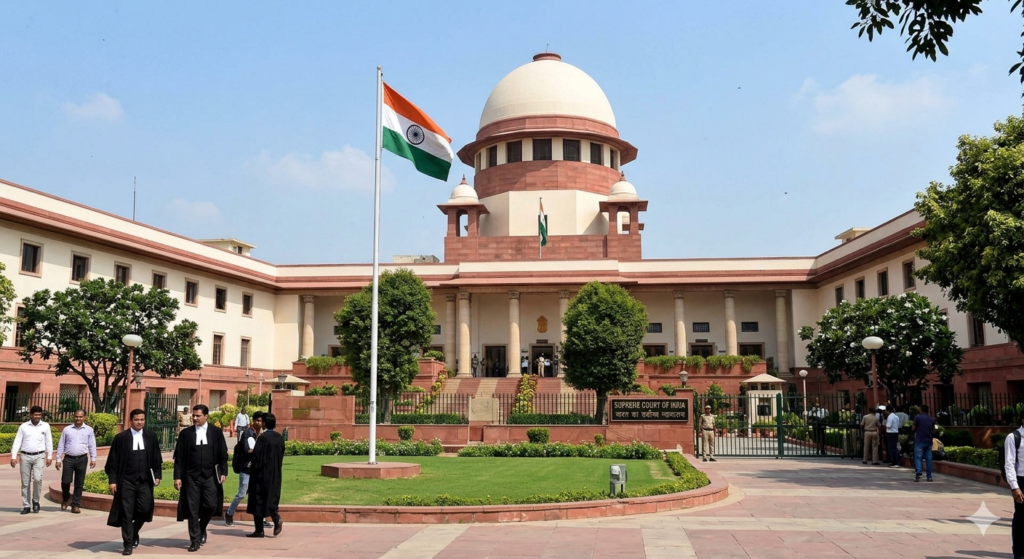
In a landmark ruling, the Supreme Court of India allowed the withdrawal of Clinically Assisted Nutrition and Hydration (CANH) for a patient who has been in a Persistent Vegetative State (PVS) for 13 years. The Court ruled that CANH constitutes a “medical treatment” that can be lawfully withheld. It established a holistic “best interests” test combining medical futility and substituted judgment, and further streamlined the Common Cause guidelines to reduce unnecessary judicial interventi
Case Details / Citation
- Case Name: Harish Rana v. Union of India & Ors.
- Court: Supreme Court of India (Extra-Ordinary Appellate Jurisdiction)
- Bench: J.B. Pardiwala, J.
- Case Number: Miscellaneous Application No. 2238 of 2025 in Special Leave Petition (Civil) No. 18225 of 2024
- Citation: 2026 INSC 222
- Date of Judgment: March 11, 2026
Headnotes (Important Legal Principles)
- Constitutional Law – Article 21 – Right to Die with Dignity: The Court held that the fundamental right to live with dignity inherently encompasses dignity until death, including a dignified dying process. The withdrawal or withholding of medical treatment merely allows the natural path of life to run its inevitable course and cannot be termed as the extinguishment of life.
- Medical Law – Passive Euthanasia – Nomenclature: The Court clarified that the term “passive euthanasia” should be substituted with the “withdrawing or withholding of medical treatment.”
- Medical Law – Clinically Assisted Nutrition and Hydration (CANH) – Status as Medical Treatment: The Court unequivocally established that CANH (including enteral feeding via a PEG tube) is a “medical treatment” and not mere basic care. It involves clinical protocols, surgical devices, and ongoing medical supervision, making it subject to the same clinical judgment and legal principles governing the withholding of life-sustaining interventions.
- Medical Law – Non-Voluntary Passive Euthanasia – Best Interest Principle: The determination to withdraw medical treatment for an incompetent patient must be strictly guided by the patient’s “best interests.” This assessment utilizes a balance sheet approach incorporating medical futility and the substituted judgment standard, focusing on what the patient would have chosen if competent.
- Medical Law – Streamlining Common Cause Guidelines: The Court reiterated that if both the Primary and Secondary Medical Boards unanimously certify the withdrawal of life-sustaining treatment, there is no requirement for further court intervention to execute the decision.
Background of the Case
In August 2013, a 20-year-old engineering student named Harish Rana suffered a severe traumatic brain injury after a tragic fall from the fourth floor of his paying guest accommodation. The diffuse axonal injury left him in a Persistent Vegetative State (PVS). For the next 13 years, his condition remained entirely static with no neurological improvement. He was kept alive through a tracheostomy and by Clinically Assisted Nutrition and Hydration (CANH) administered via a Percutaneous Endoscopic Gastrostomy (PEG) tube.
Seeing no hope of recovery and witnessing his continued suffering from bedsores and infections, Harish’s parents approached the Delhi High Court under Article 226, seeking an evaluation under the Common Cause guidelines to withdraw the PEG tube. The High Court dismissed the petition, reasoning that Harish was not being mechanically kept alive on a ventilator and could sustain himself without extra external medical aid.
The parents then filed a Special Leave Petition (SLP) before the Supreme Court. While the Supreme Court initially ordered the government to provide for his home-based care, it granted the parents the liberty to approach the Court again. Subsequently, the parents filed the present Miscellaneous Application to constitute the required medical boards to ascertain whether the life-sustaining treatment could be withdrawn. Both the Primary Medical Board and the AIIMS Secondary Medical Board unanimously concluded that the patient was in an irreversible PVS and that continuing CANH was medically futile.
Legal Issues Before the Court
The Supreme Court formulated the following pivotal questions of law:
- Whether the administration of Clinically Assisted Nutrition and Hydration (CANH) is to be regarded as “medical treatment”?
- What is the meaning, scope, and contours of the principle of the “best interest of the patient” in determining whether medical treatment should be withdrawn or withheld?
- Whether it is in the best interest of the applicant that his life be prolonged by the continuation of medical treatment?
- What further steps are to be undertaken in the event a decision to withdraw or withhold medical treatment is arrived at?
Arguments of the Parties
Petitioner/Appellant (Applicant):
The learned counsel for the applicant submitted that the PEG tube supplying CANH is a form of mechanical life support and unequivocally constitutes medical treatment. The focal question was not whether it was in the patient’s best interest to die, but whether it was in his best interest to prolong life artificially when there was zero hope of recovery. Relying heavily on UK precedents, the counsel urged the Court to acknowledge the futility of the treatment. Furthermore, the counsel highlighted the practical hurdles in implementing the Common Cause guidelines, noting that legal uncertainty forces hospitals to discharge terminal patients against medical advice rather than officially initiate the medical board process.
Respondent (Union of India):
The Additional Solicitor General (ASG) concurred with the applicant that CANH administered via medical devices is indeed “medical treatment.” The ASG submitted that withdrawing it amounts to an act of omission falling within the permissible contours of passive euthanasia. Citing the unanimous medical reports, the ASG agreed that the patient was in an irreversible PVS and supported the family’s considered decision to allow a humane passing, praying only that proper palliative care arrangements be made to ensure dignity and comfort.
Court’s Analysis and Reasoning
The Court conducted an exhaustive review of the constitutional foundations laid down in Common Cause (2018). First, it drew a clear line between active and passive euthanasia. Active euthanasia relies on a positive act (like a lethal injection) that curtails the natural lifespan, whereas passive euthanasia is an omission that merely allows the underlying fatal condition to run its course. The Court emphasized that a doctor withholding futile treatment is not committing an “illegal omission” but faithfully executing their duty of care. To avoid confusion, the Court abandoned the term “passive euthanasia” entirely, replacing it with the “withholding or withdrawing of medical treatment.”
Addressing the first issue, the Court observed that CANH (enteral feeding via a PEG tube) is not mere “basic care” or akin to spoon-feeding. It involves surgical installation, precise medical dosage, risk of fatal infections like peritonitis, and continuous medical supervision. As such, CANH is definitively “medical treatment.”
Regarding the “best interest” principle, the Court engaged in a comprehensive analysis of global jurisprudence (from the USA, UK, Ireland, Australia, and New Zealand). The Court ruled that determining an incompetent patient’s best interest requires a holistic “balance sheet” approach. This weighs objective medical considerations (futility, lack of recovery, indignity) alongside non-medical factors. Crucially, it incorporates the “substituted judgment standard”—assessing what the patient themselves would have wanted based on their values and lifestyle, rather than simply what caregivers desire.
Applying these principles to Harish Rana, the Court held that the continuation of CANH was medically futile. Given his irreversible brain damage and PVS status, artificial feeding merely prolonged biological existence devoid of consciousness, causing him immense indignity. Thus, withdrawing CANH was completely in his best interest.
Key Observations of the Court (With Citation)
- “The essential distinction between active and passive euthanasia transcends the simplistic binary of acts and omissions… active euthanasia is characterised as ‘causing death’ because it introduces an external, intrusive agency… Conversely, passive euthanasia is understood as ‘allowing death to occur’ or ‘letting die’.” (Para 45)
- “To acknowledge that the very survival of the patient in a PVS condition is resting on an invasive form of artificial support made possible by medical science and technology, yet deny such intervention the status of a ‘medical treatment’ in respect of which doctors could exercise their clinical judgment, would stretch the concept of basic or primary care to an extent that it becomes illogical.” (Para 125)
- “Where a responsible body of informed medical opinion concludes that the patient’s condition is irreversible, that there exists no reasonable hope of recovery, and that continued treatment merely sustains biological existence without consciousness or cognitive function, causing indignity to the life of the patient, such existence cannot, in law or medical ethics, be regarded as constituting a benefit to the patient.” (Para 163)
- “We would like to reiterate that if both the primary medical board and secondary medical board certify the withdrawal or withholding of medical treatment, there is no further requirement for any court intervention, except in the very limited circumstances as explained in our detailed discussion hereinabove.” (Para 240)
Precedents and Statutes Relied Upon
- Common Cause v. Union of India (2018) 5 SCC 1 & (2023) 14 SCC 131: Formed the primary binding precedent. It established the legality of passive euthanasia and Advance Medical Directives in India, anchoring them in the Article 21 right to live with dignity.
- Gian Kaur v. State of Punjab (1996) 2 SCC 648: Relied upon to conceptually distinguish between unnatural extinguishment of life (suicide) and the acceleration of the conclusion of the natural process of death.
- Airedale NHS Trust v. Bland (1993) All ER 821 (House of Lords): Heavily cited to establish that artificial feeding (CANH) is a medical treatment, and that withdrawing it for a PVS patient whose condition is irreversible is lawful, as treatment offers no therapeutic benefit.
- Cruzan v. Director, Missouri Dept. of Health (1990): US Supreme Court decision discussed to evaluate the interaction between the state’s interest in preserving life, the substituted judgment standard, and a patient’s individual best interest.
Final Decision / Holding
The Supreme Court formally permitted the withdrawal of Clinically Assisted Nutrition and Hydration (CANH) for Harish Rana. Holding that the treatment was medically futile and contrary to the patient’s best interest, the Court directed the attending medical practitioners to safely withdraw the PEG tube support. Crucially, the Court explicitly directed the government and healthcare providers to furnish comprehensive palliative and End-of-Life (EOL) care to ensure the patient’s final transition is humane, dignified, and entirely free of physical distress or pain.
- Why the judgment is important: This ruling serves as the first major practical application of the Common Cause guidelines by the Supreme Court of India. By unequivocally determining that CANH is a “medical treatment,” the Court eliminated a highly sensitive grey area. Previously, removing feeding tubes was often misconstrued as “starvation” and deterred doctors; this judgment legally equates it to turning off a mechanical ventilator.
- Impact on existing law: The judgment radically decentralizes end-of-life decision-making. By ruling that a unanimous agreement between the Primary and Secondary Medical Boards is sufficient to execute the withdrawal of life support, the Court successfully removed the heavy burden of judicial intervention. Families and doctors no longer need to approach High Courts under Article 226 unless there is a disagreement between the boards.
- Possible implications for future cases: The explicit shift in nomenclature from “passive euthanasia” to “withdrawal or withholding of medical treatment” will likely reshape hospital protocols across India. Moreover, the Court’s formal integration of the “substituted judgment standard”—projecting what the incompetent patient would have wanted—brings Indian jurisprudence into complete harmony with progressive global health law standards.
Key Takeaways
- The Supreme Court allowed the withdrawal of life-sustaining CANH for a patient in a Persistent Vegetative State for 13 years.
- “Passive Euthanasia” has been legally rebranded as the “withdrawing or withholding of medical treatment.”
- Clinically Assisted Nutrition and Hydration (CANH) administered via tubes is legally classified as “medical treatment,” not mere basic care.
- The “Best Interest” principle requires a balance-sheet approach, evaluating medical futility alongside the patient’s dignity and reconstructed wishes (substituted judgment).
- Doctors cannot be held criminally liable for an “illegal omission” when withholding futile medical treatment, provided statutory safeguards are strictly followed.
- If Primary and Secondary Medical Boards unanimously agree to withdraw treatment, no High Court or Supreme Court intervention is required.
- Following the withdrawal of treatment, patients must be provided with robust palliative and End-of-Life care to prevent suffering.
Conclusion
The decision in Harish Rana v. Union of India stands as a monumental stride forward in Indian medical jurisprudence. By granting relief to a family that endured 13 years of immense emotional and physical agony, the Supreme Court has demonstrated profound compassion grounded in constitutional morality. More importantly, the judgment provides crystal-clear legal certainty for healthcare professionals. It affirms that allowing a dignified, natural death by removing medically futile interventions is not a crime, but rather the ultimate fulfillment of a doctor’s duty of care.