Introduction
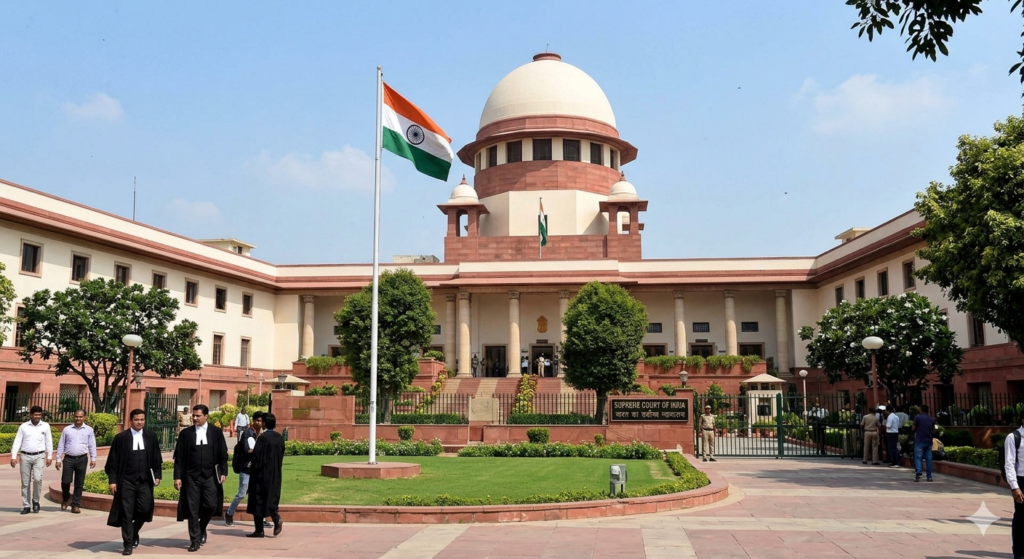
In a significant judgment reaffirming the expansive breadth of the High Court’s inherent jurisdiction and reinforcing procedural safeguards under penal statutes, the Supreme Court of India quashed a 2002 criminal complaint initiated under the erstwhile Foreign Exchange Regulation Act, 1973 (FERA) against Standard Chartered Bank. A Division Bench comprising Justice J.B. Pardiwala and Justice Manoj Misra held that the mere availability of an alternative remedy of revision under Section 397 of the Code of Criminal Procedure, 1973 (CrPC) does not operate as an absolute bar to a petition under Section 482 CrPC.
Delivering the judgment in Standard Chartered Bank & Anr. v. Enforcement Officer, Ministry of Home Affairs & Anr. (2026 INSC 727), the apex court ruled that the mandatory requirement of issuing an “opportunity notice” under the proviso to Section 61(2) of FERA is a statutory prerequisite before a Magistrate can take cognizance. Furthermore, the Court declared that subjecting an accused to an unexplained 23-year delay at the threshold stage of issuing summons violates the fundamental right to a speedy trial under Article 21 of the Constitution, keeping the accused in an impermissible state of “suspended animation.”
Factual Background (The Matrix)
The genesis of the dispute traces back to transactions conducted in 1991–1992. Standard Chartered Bank (Appellant No. 1), an authorized dealer in foreign exchange, and its officer Ms. B. Mchugh (Appellant No. 2) were implicated in allegations of handling unauthorized remittances routed through the bank’s Vostro Account maintained in Mumbai. The prosecution alleged that banker’s cheques and drafts procured through proxy purchasers were credited for the benefit of a non-resident entity, Indo International Corporation Ltd., in contravention of Section 56(1) read with Section 73(3) of FERA.
Upon realizing the non-conformity with Exchange Control Regulations, the bank reversed the credit entries, blocked the entire sum of ₹30,00,000/-, and voluntarily surrendered it to the Enforcement authorities in January 1993.
On May 30, 2002—barely two days prior to the expiration of the statutory “sunset period” prescribed under the Foreign Exchange Management Act, 1999 (FEMA)—the Enforcement Directorate lodged criminal complaints (Criminal Case Nos. 1503-1504 of 2002) before the Metropolitan Magistrate. Cognizance was taken on the same date. However, the complainant failed to take effective steps to serve process for nearly a decade, allowing the proceedings to languish at the initial stage.
The appellants approached the High Court of Judicature at Bombay seeking quashing of the complaints under Section 482 CrPC. By its impugned order dated March 22, 2012, the High Court declined relief, holding inter alia that a petition under Section 482 CrPC was non-maintainable due to the availability of an alternative revisional remedy under Section 397 CrPC. Aggrieved, the appellants preferred Criminal Appeal Nos. 2142-2143 of 2013 before the Supreme Court.
Core Issues Framed
The Supreme Court formulated three primary questions of law for its determination:
- Maintainability of Section 482 CrPC Petition: Whether the High Court was correct in holding that the availability of an alternative remedy of filing a revision application under Section 397 of the CrPC operates as a threshold bar to a petition under Section 482 of the CrPC?
- Mandatory Compliance of Section 61(2) Proviso, FERA: Whether non-compliance with the mandatory requirement of an opportunity notice under the proviso to Section 61(2) of FERA warrants quashing of the criminal complaints and the consequent summoning order?
- Violation of Right to Speedy Trial: Whether the appellants’ fundamental right to a speedy trial guaranteed under Article 21 of the Constitution was infringed due to persistent, unexplained delays spanning over two decades?
Arguments at a Glance
Submissions on behalf of the Appellants:
- Senior Counsel Mr. Shyam Divan, appearing for Standard Chartered Bank, submitted that the High Court erred in rejecting the Section 482 petition on maintainability. Relying on Dhariwal Tobacco Products Ltd. v. State of Maharashtra, he argued that the existence of a revisional remedy under Section 397 cannot oust the High Court’s inherent powers.
- On merits, he contended that Section 61(2) proviso of FERA creates a statutory bar against taking cognizance without first granting the accused an opportunity notice to demonstrate that they held the necessary permission. No such notice was ever served or produced on record.
- He emphasized that a delay of 10 years in investigation followed by 13 years of total inactivity at the trial stage constitutes an unmitigated violation of Article 21.
Submissions on behalf of the Respondents:
- Senior Counsel Ms. Ruchi Kohli, appearing for the Enforcement authorities, contended that the High Court had actually considered the merits of the delay and rightly refused to quash the proceedings solely on that ground.
- She submitted that the delay was attributable to the appellants avoiding service and failing to appear before the Trial Court despite repeated issuance of process.
- She argued that the protection of Article 21 is triggered only in cases of intentional, deliberate delay by the prosecution, which was absent in the present matter.
Court’s Observations & Reasoning (Ratio Decidendi)
1. On Section 482 vs. Section 397 CrPC: Inherent Powers Cannot Be Ousted
Writing for the Bench, Justice J.B. Pardiwala emphatically rejected the High Court’s view that the availability of a revisional remedy under Section 397 CrPC acts as a bar to entertaining a quashing petition under Section 482 CrPC. Reaffirming settled jurisprudence in Dhariwal Tobacco Products Ltd., Prabhu Chawla v. State of Rajasthan, and Akanksha Arora v. Tanay Maben, the Court underscored that the nomenclature of a petition is immaterial.
“The availability of an alternative remedy of revision under Section 397 of the CrPC does not, by itself, operate as a bar to the exercise of the inherent jurisdiction of the High Court under Section 482 of the CrPC. The two provisions operate in distinct spheres, and the mere existence of a revisional remedy cannot be treated as ousting the jurisdiction preserved under Section 482… Nor is the nomenclature of a petition determinative, and a High Court, in order to do substantive justice, may treat a petition filed under Section 482 as one under Section 397, and vice versa, rather than non-suiting a party on a hyper-technical ground of maintainability.”
The Court added that the High Court’s continuous power of superintendence over subordinate courts is also saved under Section 483 CrPC to prevent abuse of process and secure the ends of justice.
2. On Section 61(2) FERA: Opportunity Notice is a Mandatory Precondition
Analyzing the penal framework of FERA, the Supreme Court ruled that the proviso to Section 61(2) incorporates the principles of audi alteram partem. Granting an opportunity to show permission from the Reserve Bank of India (RBI) is a mandatory precondition; without proof of such service, a Judicial Magistrate lacks jurisdiction to take cognizance.
Applying the well-established legal maxim expressio unius est exclusio alterius and the rule in Devashis Bhattacharya v. Union of India and Sanjay Malviya v. R.K. Rawal, the Bench noted that where a law mandates a thing to be done in a particular manner, it must be done in that manner or not at all.
“The service of an opportunity notice under the proviso to Section 61(2) of FERA is a mandatory requirement, without compliance of which no complaint under Section 56 or 57 of FERA respectively, can validly be instituted, and no Magistrate can validly take cognizance of the offence alleged therein… The Magistrate shall satisfy himself, before taking cognizance, that such opportunity was in fact given, or otherwise it may render the order taking cognizance unsustainable and liable to be quashed.”
Because the prosecution failed to mention the date of the opportunity notice, produce a copy before the Magistrate, or submit proof of service even after 23 years, the Court concluded that cognizance was taken in a mechanical manner without satisfying statutory preconditions.
3. On Article 21 & Right to Speedy Trial: Protracted Inaction Flouts Constitutional Mandate
On the question of constitutional guarantee under Article 21, the Bench conducted a detailed review of landmark precedents, including the Constitution Bench decision in Abdul Rehman Antulay v. R.S. Nayak, P. Ramachandra Rao v. State of Karnataka, and the recent ruling in Kailash Chandra Kapri v. State of Uttar Pradesh.
Examining the record, the Court observed that while the complaint was filed in 2002 for 1991–1992 transactions, the prosecution failed even to collect summons from the court for two years, and thereafter allowed process to remain unserved for nearly a decade. Even when time-bound directions were issued by the High Court to conclude the trial, the Enforcement authorities failed to take steps to execute process or appear before the court.
“Keeping a person in what it described as a state of ‘suspended animation’ for decades is wholly incompatible with the fair, just and reasonable procedure that Article 21 contemplates, and quick and timely justice is the very sine qua non of that constitutional guarantee… To permit the respondent complainant to continue in such circumstances would be to allow the appellants to remain in a state of suspended animation indefinitely.”
Conclusion & Impact
Holding that the prosecution demonstrated an absolute lack of diligence and unwillingness to prosecute, the Supreme Court allowed the appeals, set aside the judgment of the Bombay High Court, and quashed Criminal Case Nos. 1503-1504 of 2002 along with the summoning orders against Standard Chartered Bank and its official.
Key Takeaways for Litigants and Legal Practice:
- Procedural Flexibility under CrPC: Re-emphasizes that High Courts must not dismiss Section 482 petitions on technical grounds where revisional remedies exist; courts are expected to convert pleadings when necessary to deliver substantive justice.
- Strict Compliance in Regulatory Prosecutions: Sets a rigorous standard for regulatory and enforcement agencies (such as the Enforcement Directorate) regarding statutory pre-conditions. Failure to demonstrate bona fide compliance with mandatory show-cause or opportunity notices at the threshold will invalidate cognizance.
- Check on Indefinite Trial Delays: Serves as a strong precedent against systemic delays in white-collar criminal prosecutions, reiterating that enforcement agencies cannot use pending complaints as leverage while letting cases languish indefinitely at the process stage.